What We Know — and Don’t Know — About Anna Erika Olsson’s Life
October 2026 | Family Stories | Jepson Family
By Susan Jepson Lenski
Connection: Annie Olsson Jepson was my great-grandmother.
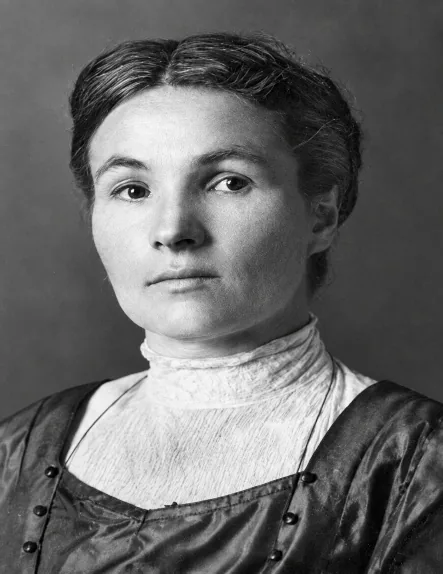
Annie Olsson Jepson, 1913.
A Surprising Family Story
Most parents today would hesitate to let their sixteen-year-old daughter travel across town alone. And yet, sometime around 1896, sixteen-year-old Anna Erika Olsson left rural Sweden for Chicago, possibly by herself.
What would make a teenage girl leave everything she knew for a big city across the ocean?
That question has become one of the most intriguing mysteries in my family research.
A Girl from Rural Sweden
Anna Erika Olsson was born in 1880 in Allerum, a small farming parish in Skåne, Sweden. She was the seventh of eight children born to Anders Olsson, a tenant farmer struggling to support a large family from the land.
Her world was small and rural. Fields stretched between scattered farms, and most people spent their entire lives within a few miles of where they were born.
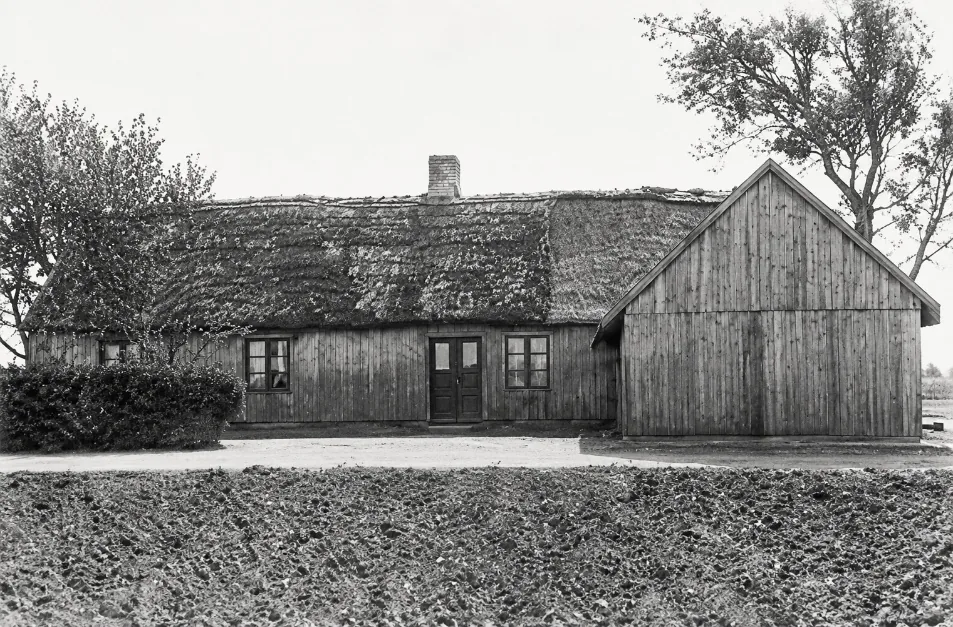
In the 1970s, Anna’s daughter, Mildred Morse, traveled back to Sweden and photographed the small house where Anna grew up.
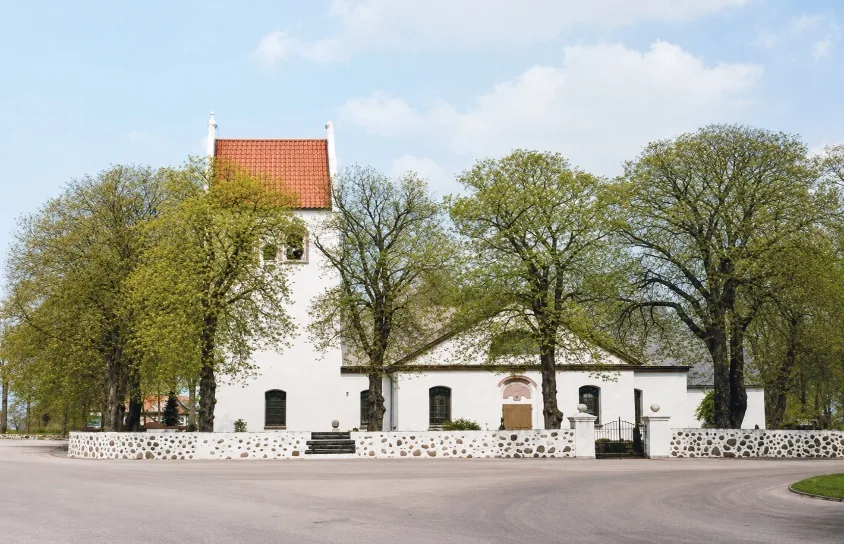
At some point as a young woman, she worked as a servant in the household of the parish priest.
And then, for reasons we still do not know, she left.
None of Anna’s siblings emigrated. They remained in the Allerum area. So far, no close relatives or traveling companions connected to Anna’s migration have been identified.
That absence has puzzled me.
Most of my immigrant ancestors traveled within family networks. One sibling went first, then another followed. Cousins settled near cousins. Friends from the same village appeared together in records.
Anna’s story is different so far.
And that is exactly what makes it so compelling.
Leaving Allerum
In the spring of 1896, Anna left Allerum. She would have traveled first into nearby Helsingborg, the closest major city and transportation hub in northwestern Skåne.
For a girl raised in a farming parish, Helsingborg itself may have felt overwhelming. The harbor was crowded with steamships, freight wagons, railway traffic, and emigrants carrying trunks and papers for journeys across the ocean.
Like many Swedish emigrants, Anna probably did not sail directly from Sweden to America. Most traveled first by feeder steamer to a larger European port such as Hull or Liverpool.
If she followed the common English route, Anna may have crossed the North Sea to Hull, then boarded a train across England to Liverpool, where thousands of emigrants waited for transatlantic steamships bound for New York.
The Atlantic crossing itself lasted one to two weeks.
Anna almost certainly traveled in steerage, the cheapest class available. Conditions were crowded and uncomfortable. And yet the voyage also carried excitement. Swedish, Norwegian, Danish, German, and Irish emigrants formed temporary communities onboard. Songs were sung. Stories were exchanged. America was discussed in dozens of accents and languages.
For many emigrants, the journey marked the dividing line between an old life and a new one.
Bound for Chicago
When Anna arrived in New York, her journey was still not over. She would have passed through immigration inspection and boarded a westbound train toward Chicago.
By the 1890s, Chicago had become one of the largest Swedish communities in the world outside Sweden. Swedish immigrants built churches, boardinghouses, restaurants, and neighborhoods where newcomers could survive even if they spoke little English.
By 1900, a probable census entry places Anna (now known as Annie) living at 179 Chicago Avenue and working as a servant in the household of Augusta Arneson, a Swedish restaurant keeper.
The household was a typical boardinghouse with other Swedish servants living there. The census indicates that Annie could not speak English. Living with other Swedish speakers must have eased her transition into Chicago life.
The Swedish Network
Although no direct relationship has yet been identified between Anna and the Arneson family, several circumstantial connections suggest they may have belonged to the same Swedish immigrant network in Chicago.
Members of the Arneson family emigrated during the same period as Anna, and both families later appear connected to Gustavus Adolphus Lutheran Church, one of Chicago’s important Swedish congregations.
That church became central to Anna’s life. In 1901, Anna married Martin Jepson there. Their children were baptized there. Her death was recorded there.
And yet, interestingly, church records note that Anna herself was not formally a member of the congregation.
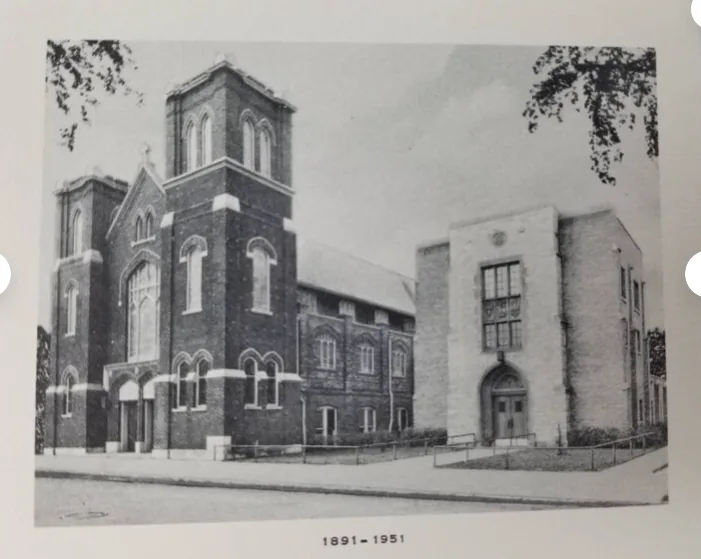
Gustavus Adolphus Lutheran Church, 1951.
Building a Life
By 1910, Anna’s life had changed dramatically from the frightened teenager who likely arrived in Chicago with little money and limited English.
She was married, raising children, and now reported that she could read, write, and speak English. But her life was not without hardship. By 1910 she had given birth to three children, though only two were still living.
She and Martin eventually had two more children, but tragedy struck again when their oldest son was killed by a train at sixteen years old.
Martin, another Swedish immigrant from Skåne, became a foreman on the Illinois Central Railroad. Before 1920, Martin and Annie purchased a home on Chicago’s South Side — a remarkable achievement for two immigrants who had begun life in the rural parishes of southern Sweden.
Annie died in 1926 of heart failure. She was only forty-six years old.
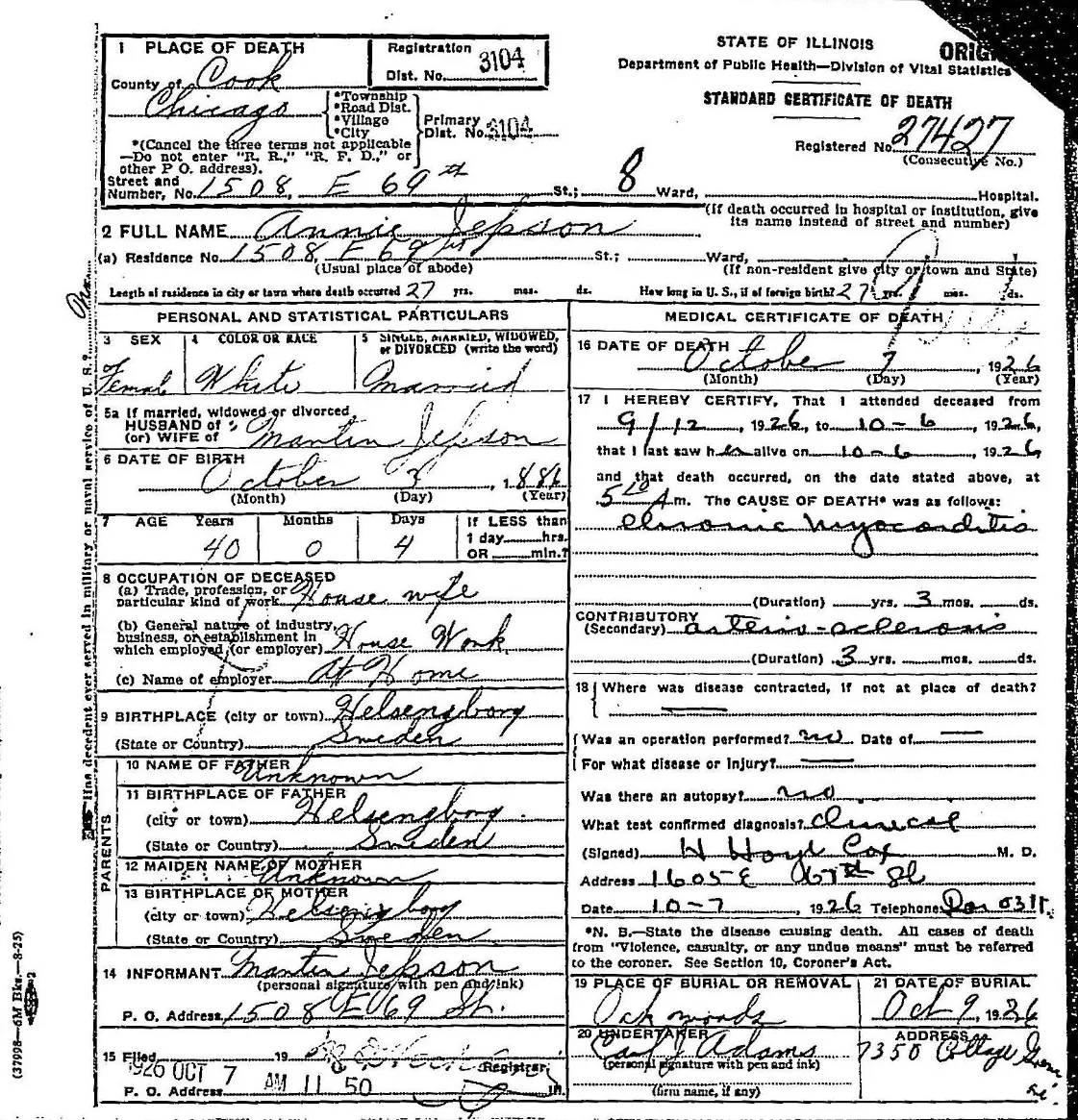
Annie Jepson’s death certificate
The Part That Stays with Me
Many questions about Anna’s life remain unanswered: Did she travel alone? Did someone from Allerum help her find work in Chicago? Did she correspond with family back in Sweden? Why did she choose America when her siblings stayed behind?
Perhaps someday I will find the documentation that answers those questions.
But even without every detail, Anna’s story reveals something remarkable: a sixteen-year-old girl from a tiny farming parish crossed an ocean without her immediate family, adapted to an unfamiliar language and culture, and helped build a new life for the generations that followed.
That kind of courage is easy to overlook in old records.
But it deserves to be remembered.
Sources and Related Reading
This article is based on:
- Gustavus Adolphus Lutheran Church (Chicago, Illinois), marriage register; U.S., Evangelical Lutheran Church in America (ELCA), Swedish American Church Records, 1800–1947, database with images, Ancestry.com (accessed 9 February 2023), marriage of Martin Jepson and Annie E. Olson, 16 June 1901.
- 1920 U.S., Cook County, Illinois, population schedule.
- Anna Olson death certificate, Cook County, Illinois, 1926.
Subscribe to the Newsletter
Lives Behind the Records
Questions. Discoveries. Stories from Family History.
Contact: info@ancestors2illinois.com