Patriot, Loyalist, or Simply Trying to Survive?
October 2026 | Family Stories | Samis Family
By Susan Jepson Lenski
Connection: Ebenezer Samis was my 5th great-grandfather.
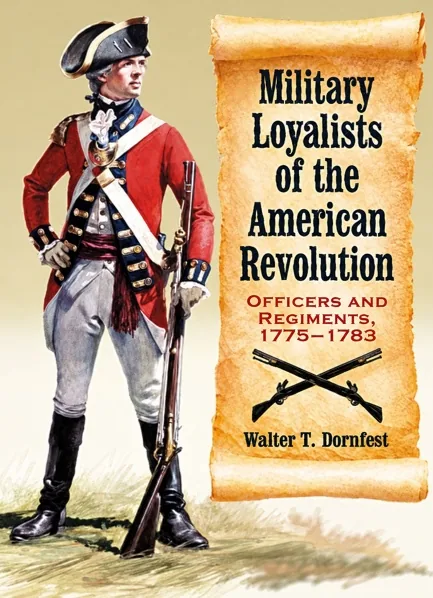
Book on Loyalists.
A Surprising Family Story
Most of us learned the American Revolution as a simple story. There were Patriots, who fought for freedom. And there were Loyalists, who sided with Britain. It feels straightforward—until family history makes it personal.
One of my ancestors, Ebenezer Sammis, was a Loyalist.
That discovery stopped me.
Like most Americans, I had spent very little time thinking about Loyalists. In school, they were usually a side note in the Revolutionary War story—the people who backed the losing side and disappeared into history.
But they didn’t disappear. Some of them were our ancestors.
At first, I was shocked that I had a Loyalist ancestor. But when I began looking more closely at Ebenezer’s story, I realized it was far more complicated than I realized.
Life on Long Island During the Revolution
Ebenezer lived in Huntington, Long Island during the Revolutionary War.
The Sammis family had been rooted on Long Island for generations. They were not recent immigrants or restless wanderers. They were established farmers with deep ties to the community. Then the war came directly to their home.
In 1776, British forces captured Long Island and occupied it for nearly the entire war. For families in places like Huntington, neutrality became almost impossible.
British authority was everywhere. This wasn’t a distant political conflict. It had arrived at their doorstep.
And Ebenezar Samis made a decision: he signed an oath to the King.
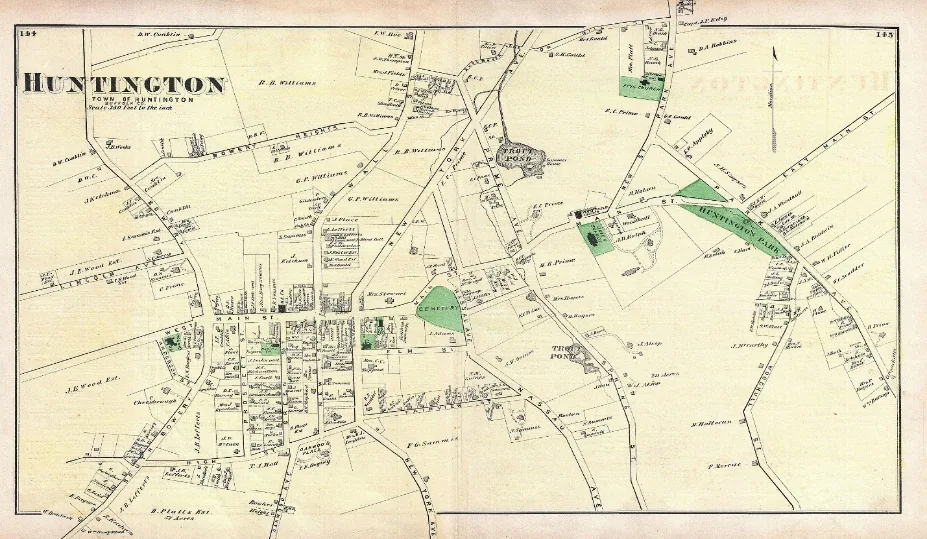
Map of Huntington, Long Island, ca. 1800.
Why Would Someone Become a Loyalist?
This is the question I kept asking: Why would an American colonist side with Britain?
There are several possibilities.
Some Loyalists genuinely believed the rebellion was wrong. Britain represented law, order, and stability. To families with land and property, revolution could feel dangerous and unpredictable.
Religion may also have played a role. The Samis family came out of old New England Puritan and Congregational traditions that valued order, discipline, and respect for authority.
But I keep coming back to another possibility. What if Ebenezer wasn’t political at all? What if he was simply practical?
Ebenezar married Sarah Tuttle in 1777. Over the next two decades, they had seven sons, including my ancestor, Benjamin, who was born in 1779.
While politicians debated liberty and empire, Ebenezer may have been thinking about something far more immediate: How do I protect my family?
The Curious Military Record
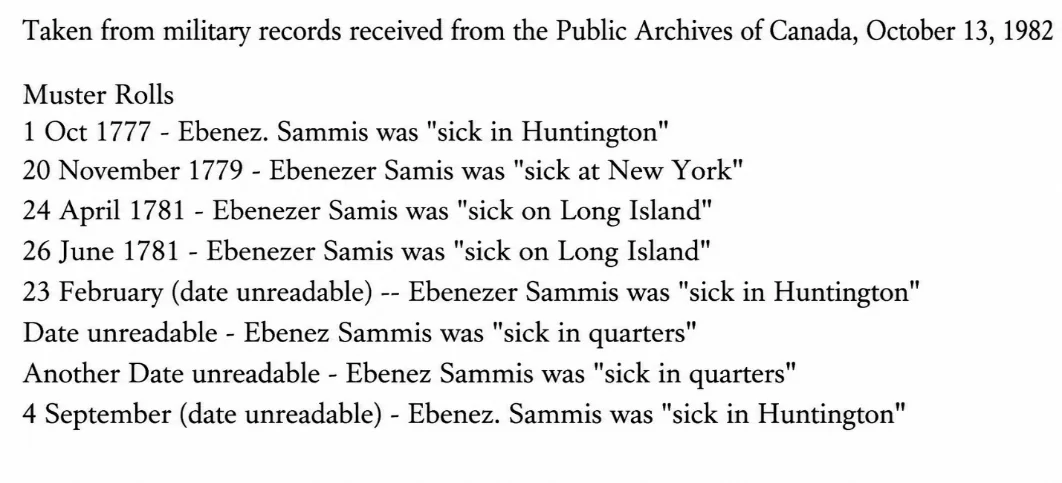
Ebenezer swore allegiance to the Crown and appears in records connected to Thomas Conkling’s Loyalist company.
But the military records contain a fascinating detail.
Between 1777 and 1781, Ebenezer was repeatedly mustered—and repeatedly marked with the same word:
Sick.
Not absent.
Not deserted.
Not discharged.
Sick.
Over and over.
That single word raises all kinds of questions.
Was he genuinely ill? Was he avoiding active service? Did he comply with British authority but quietly avoided fighting?
We can’t know.
But the records suggest something more complicated than a man enthusiastically fighting for the Crown.
After the War
The war officially ended in 1783. The British left New York. But the end of war did not mean life simply returned to normal.
Neighbors remembered.
They knew who had supported the British. They knew who had taken loyalty oaths. They knew who had served in Loyalist units, willingly or unwillingly.
I keep wondering what life felt like for Ebenezer and his family in Huntington after the war.
What was it like to walk into church? To meet neighbors in town? To raise sons in a community where everyone remembered which side you had been on?
Even if no one openly harassed him, something important may have changed: A sense of belonging.
The Samis family may still have lived on Long Island, but perhaps it no longer felt quite like home.
The Opportunity in Canada
Then came opportunity.
Because of his Loyalist service, Ebenezer qualified for a Crown land grant in Upper Canada. He received 100 acres in Cramahe Township. That grant may have changed everything.
Long Island was established and settled. Land was limited and expensive. But Ebenezer had seven sons. Seven sons who would eventually need land, work, and opportunity.
Canada offered something Long Island increasingly could not: Room to build a future.
The move to Canada can look like political exile. But I’m not sure that’s the whole story. I increasingly see it as a family strategy.
On Long Island, Ebenezer’s Loyalist record may have been uncomfortable baggage. In Canada, that same record became an asset.
It gave him access to land and a fresh start. Eventually, Ebenezar’s sons also purchased farms in the area.
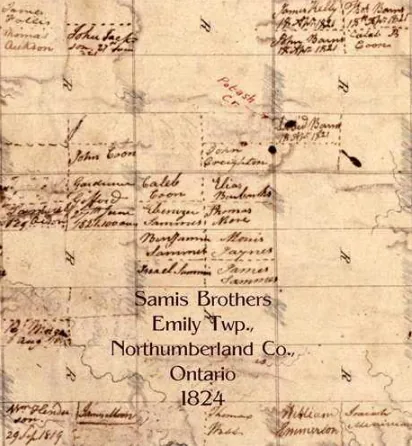
1824 map showing Samis farms
The Part That Stays With Me
What fascinates me most about Ebenezer’s story is not whether he was truly a Loyalist. It’s the complexity.
History often asks us to sort people into simple categories: Patriot or Loyalist. Right side or wrong side.
But real life is rarely that simple.
I suspect Ebenezer Sammis may not have been driven primarily by ideology.
He may have been something much more ordinary—and much more relatable.
A husband.
A father.
A farmer trying to survive a civil war and secure a future for his sons.
That possibility changes how I think about the Revolutionary War. For some families, it was not simply a story of liberty and independence. It was also a story of uncertainty, divided loyalties, displacement, and hard choices.
Family history keeps teaching me the same lesson.
Our ancestors did not live in neat categories. They lived in messy realities.
And sometimes the most interesting stories come from the ancestors who force us to sit with that kind of uncertainty.
Sources and Related Reading
- The Refugees of 1776 from Long Island to Connecticut. Provo, UT: Ancestry.com, 2005, p. 1063.
- Williams, Bill. Samis and Related Families. Utica, Kentucky: McDowell Publications, date unknown.
- Emily Township, Northumberland County, Ontario. Township map showing property of “Samis Brothers,” 1824.
Subscribe to the Newsletter
Lives Behind the Records
Questions. Discoveries. Stories from Family History.
Contact: info@ancestors2illinois.com