
October 2026 | Unexpected Ancestors | Cornell Family
By Susan Jepson Lenski
Connection: Thomas Cornell was my 8th great-grandfather.

Gallows of the type that was used to hang Thomas Cornell.
A Surprising Family Story
Most of the time, family history is mundane.
As genealogists, we spend hours tracing births, marriages, deaths, migrations, and land records. Most ancestors were not famous. They lived ordinary lives—raising children, working farms, building homes, and trying to survive.
That is exactly what makes genealogy meaningful to me. I am interested in the real stories of ordinary lives. To me, this is the kind of history that needs to be recorded.
But, every once in a while, family history delivers a story so shocking that it completely changes your perspective.
This was one of those stories.
I discovered that two of my ancestors were brothers in seventeenth-century Rhode Island: Richard Cornell and Thomas Cornell.
Both are my 8th great-grandfathers through different family lines.
And Thomas Cornell was hanged for murdering his mother.
The Cornell Family in Colonial New England
The Cornell family came from Saffron Walden and emigrated to New England in 1638, eventually settling in Newport and Providence.
Thomas Cornell, Sr. and his wife Rebecca Briggs Cornell raised a family in a colonial world that was still raw, unstable, and demanding. Life in seventeenth-century New England was physically hard and emotionally intense. Homes were crowded. Families lived close together. Conflict had nowhere to hide.
By 1673, Rebecca Cornell was an elderly widow living in the household of her son, Thomas.
Then everything changed.
Rebecca Cornell Dies in a Fire
On February 6, 1673, Rebecca Cornell died in a fire at her home.
At first, her death was ruled accidental. It seemed as if she fell from her chair close enough to the fireplace that she caught on fire. But almost immediately, suspicion spread.
Rebecca’s brother, John Briggs, reported something astonishing: he claimed Rebecca’s ghost appeared to him and said she had not died by accident. She had been murdered.
And according to the ghost, the killer was her son, Thomas.
Yes—this became part of the case.
That sounds absurd to modern ears. But in colonial New England, belief in the supernatural was real and deeply woven into everyday life. Ghost stories, divine warnings, and spiritual signs were not dismissed as folklore. They were taken seriously.
Investigators exhumed Rebecca’s body.
They found injuries suggesting she may have been killed before the fire began.
The case moved to trial.
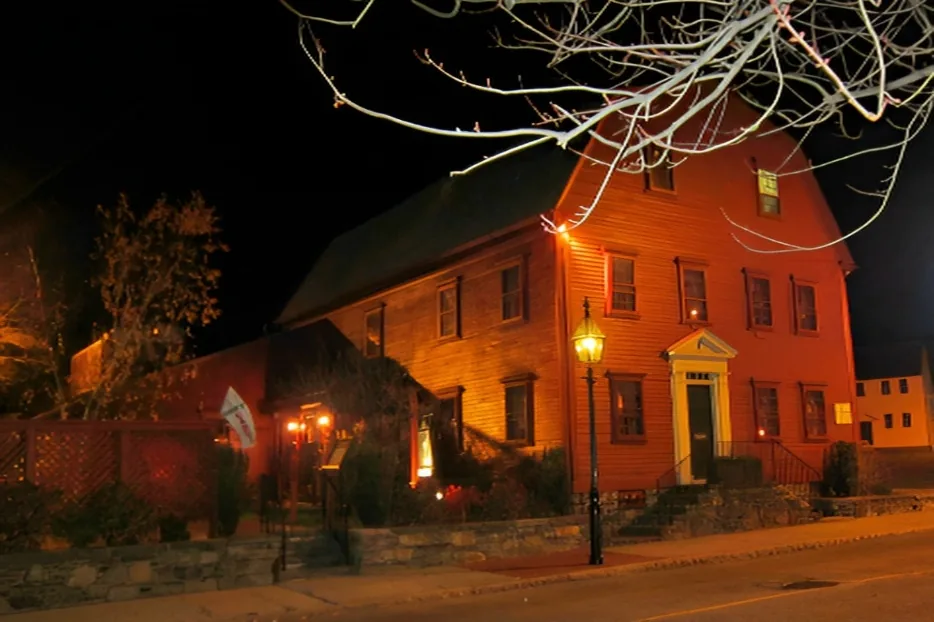
The court convened at the White Horse tavern.
A Troubled Household
The trial transcripts reveal a deeply dysfunctional household.
Witnesses described conflict, hostility, and disturbing behavior inside the home. One detail especially stood out to me: testimony suggested Thomas’s wife chased children around the house with an ax.
This was not a peaceful household.
Reading the testimony, what struck me most was not simply the accusation of murder—it was the sense of chaos, fear, and emotional volatility inside this family.
These were not distant historical figures anymore.
They felt painfully human.
Messy.
Flawed.
Troubled.
The Verdict
Thomas Cornell was convicted of murdering his mother. He was hanged in May 1673.
That makes him one of the earliest known people executed for matricide in colonial New England.
As I read the case, I kept wondering: Did he do it?
The evidence was circumstantial. Some testimony feels persuasive. Some feels unreliable. The role of spectral evidence made me uncomfortable.
Even now, historians debate aspects of the case.
What remains clear is that Rebecca Cornell’s death became one of colonial New England’s most famous murder cases. New England Historical Society article
And, in 2002, a researcher at Cornell University wrote a book about the hanging.
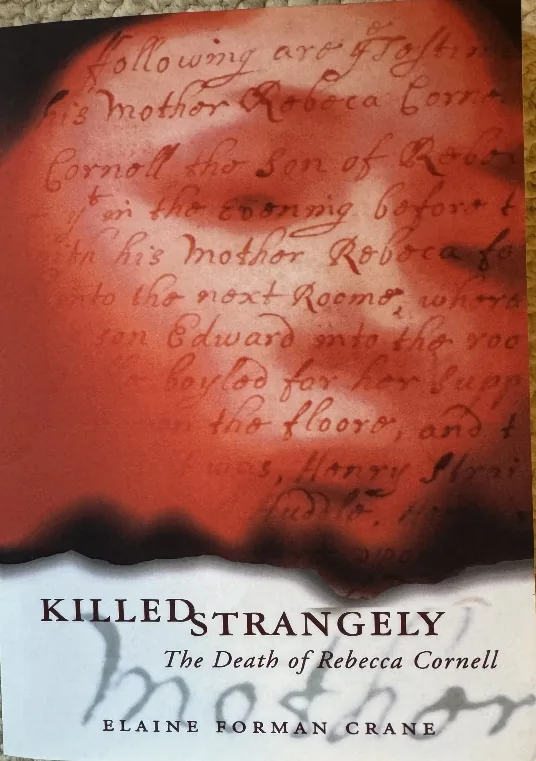
Book about the murder, 2002
The Strange Paths of Descendants
Here is where the story becomes even more remarkable. One of Thomas Cornell’s descendants includes Lizzie Borden.
Yes—the same Lizzie Borden associated with one of America’s most famous murder cases.
Thomas is said to be her 5th great-grandfather, which would have made her my step-cousin.
Meanwhile, another Cornell descendant was Ezra Cornell, co-founder of Cornell University.
One family line led to scandal and murder. Another led to higher education and institutional legacy.
And somehow, through different branches, both lines intersect with my own family story.
That is genealogy in a nutshell.
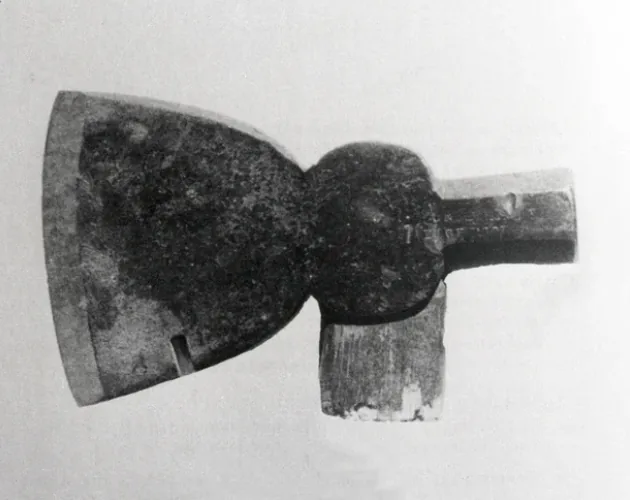
Axe similar to the one Lizzie Borden could have used.
The Part That Stays with Me
What stays with me is not the murder itself. It is the reminder that family history is rarely simple.
The same family can produce faithfulness and dysfunction, stability and chaos, builders and destroyers. One branch creates institutions that shape generations. Another becomes known for violence and tragedy.
And most branches produce neither fame nor infamy. They simply live their lives.
That may be the most important lesson genealogy teaches.
Our ancestors were people, complicated people, not merely names on a family record sheet or on a census record.
They made choices—some admirable, some destructive, many somewhere in between.
When I started researching family history, I thought I was looking for names, dates, and places.
Instead, I found stories.
Sometimes inspiring.
Sometimes unsettling.
Sometimes impossible to forget.
The Cornell story is one of those.
And it reminds me that even “ordinary” family trees can contain extraordinary moments.
Sources and Related Reading
This article is based on:
- Killed Strangely: The Death of Rebecca Cornell by Elaine Forman Crane, 2002.
Subscribe to the Newsletter
Lives Behind the Records
Questions. Discoveries. Stories from Family History.
Contact: info@ancestors2illinois.com