
October 2026 | Family Stories | Mason Family
By Susan Jepson Lenski
Connection: John Thomas Mason was my 3rd great-grandfather.
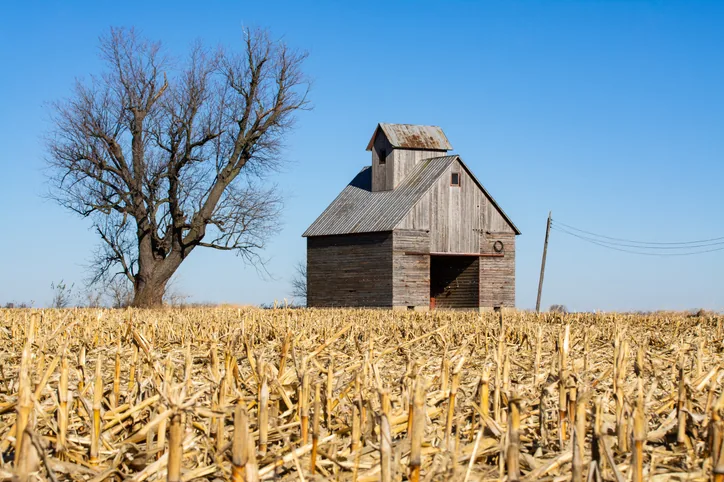
Photo of farm. iStock, used with permission.
The Illinois Farm
In 1843, John Thomas Mason purchased forty acres of prairie land near what later became West Dundee, Illinois, paying the federal government the standard price of $1.25 per acre.
Many of my ancestors did the same thing: they came to Illinois, purchased federal land for $1.25 an acre, and developed productive farms from the raw prairie.
I keep wondering, what happened to those farms? Why are there no farms left in our family?
Currently, I’m looking into one of those farms: the Mason farm.
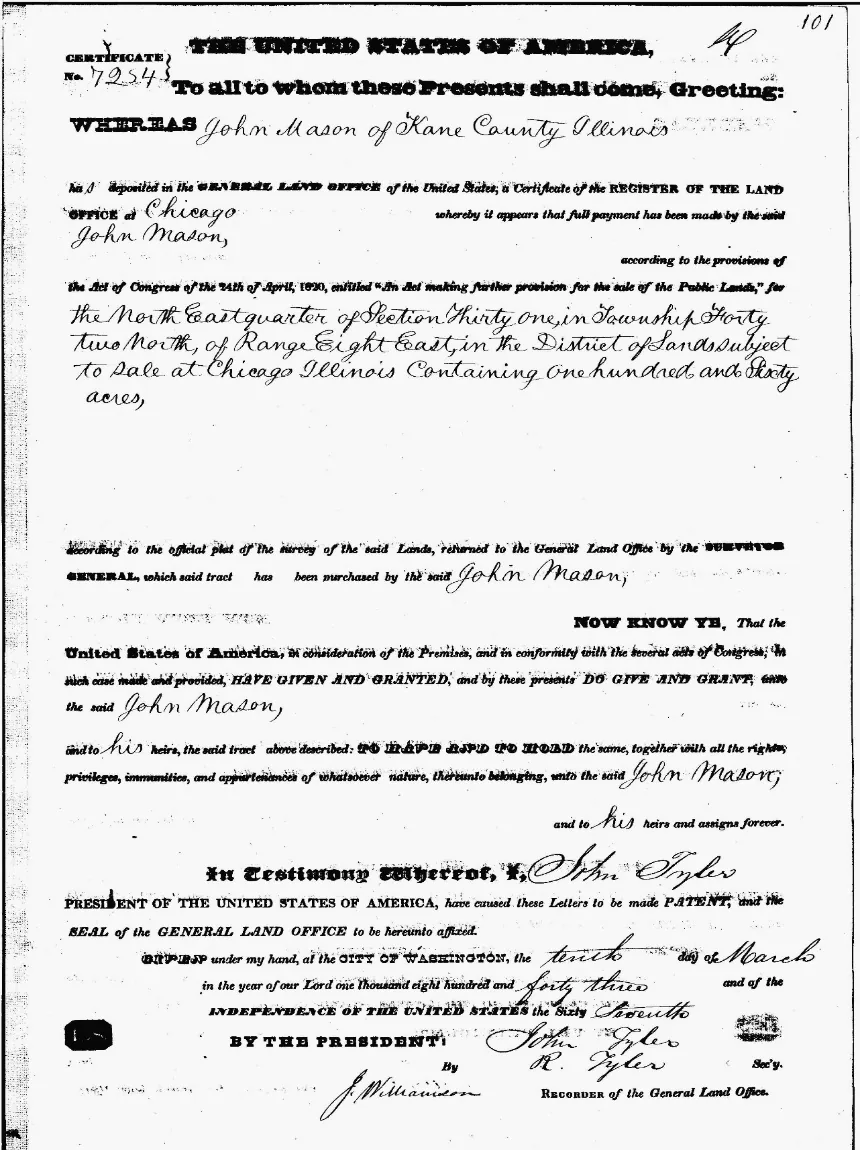
U.S. General Land Office Records, 1776-2015
From Prairie to Prosperity
In 1840, John Thomas and his brother, David, traveled from Berkshire County, Massachusetts to try his luck in Illinois. Both young men had been raised on a farm and determined to purchase inexpensive land to begin their own farms. They found the kind of land they wanted near West Dundee, Kane County, Illinois.
The Mason brothers laid claim to the land, developed it, and in 1843 were able to purchase the farms for $1.25 per acre.
At that time, northern Illinois was still frontier country. Success was far from guaranteed. Turning prairie into a productive farm required years of work.
John Thomas succeeded.
Over time, he expanded his holdings and established a prosperous farm. Like thousands of other settlers who came to Illinois during this period, he transformed inexpensive federal land into something much more valuable: a home, a livelihood, and property that could be passed to the next generation.
For family historians, those early land purchases are often where the story ends. We find the patent or deed, locate the property on a map, and celebrate the discovery.
But perhaps we should also ask another question: What happened to the land afterward?
The Next Generation Changed the Farm
John Thomas’s son, Judson Philetus (J. P.) Mason, inherited a very different agricultural world.
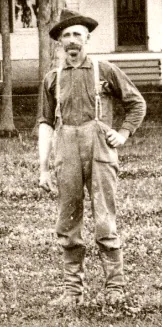
J.P. Mason, date unknown.
By the late nineteenth century, northern Illinois farming was changing. Grain farming was increasingly giving way to dairying, particularly in the Fox River Valley.
J. P. adapted.
In 1877, he established the Walnut Grove Creamery on the family property. The business became part of the rapidly growing dairy industry centered around Elgin, which became nationally known for butter production and pricing.
In only two generations, the Mason property had evolved from a frontier farm into a commercial dairy operation.
That transition is worth looking for in other Illinois farm families. Our ancestors did not necessarily farm the same way throughout their lives. They changed crops, added livestock, adopted new equipment, established businesses, and responded to new markets.
A farm can tell us not only where a family lived, but how it adapted.
A Much Harder Agricultural World
The third generation faced circumstances neither John Thomas nor J. P. could have anticipated.
Raymond Mason inherited the farm during one of the most difficult periods in American agricultural history. The Great Depression devastated farm prices and disrupted rural communities across the Midwest. Families who had survived droughts, crop failures, and hard winters now faced economic forces largely beyond their control. Across Illinois, farms that had remained in families for generations were sold, divided, mortgaged, or abandoned.
Somewhere during this period, the Mason story took a dramatic turn.
Family members remember that the farm burned, probably sometime in the 1940s. I have not yet been able to determine exactly when the fire occurred, what caused it, or whether the property was sold before or after the fire.
What I do know is that the farm eventually passed out of the family.
What Remains?
In 1985, I visited the old Mason property on Mason Road.
Very little remained.
The silo and windmill still stood, silent reminders of the dairy operation that had once occupied the land. But the surrounding land was abundant with a corn crop.
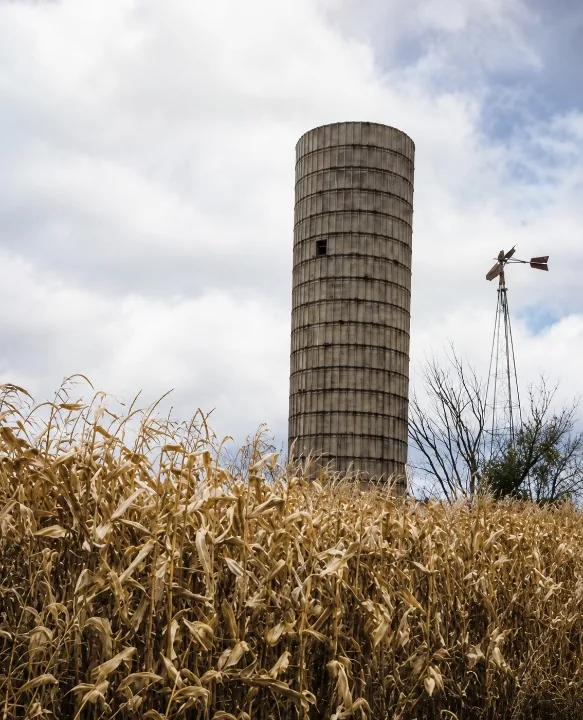
Mason farm, 1985.
Forty years later, in 2025, I returned.
The landscape had changed almost beyond recognition. A Tesla charging station now occupies land that once supported cows, barns, creamery buildings, and generations of Mason family labor. The land is near an Interstate Highway. Commercial buildings line the road that was once farmland.
The contrast could hardly be greater.

Former Mason farm, 2025.
Was Losing the Farm Really a Loss?
At first glance, the disappearance of a family farm can feel like a sad ending.
Generations worked to acquire that land, improve it, and keep it productive. Then somehow it disappeared from the family. But I am beginning to wonder whether that is always the right way to think about it.
The Mason farm created opportunities that extended far beyond the land itself. John Thomas converted prairie into property. J. P. converted that agricultural foundation into a successful dairy business.
Later generations used the opportunities created by those earlier generations to pursue education, professional careers, and lives that no longer depended on farming.
The physical farm disappeared. But perhaps the farm had already accomplished something much larger.
The Part That Stays with Me
What stays with me most is the contrast.
In 1843, John Thomas Mason looked across open Illinois prairie and saw opportunity. Over the next century, three generations built a farm, a creamery, and a life on that land.
The farm was more than a business. It was a family center, a source of identity, and tangible evidence of generations of labor.
By the time I stood there in 2025, almost all of it was gone. As I reflected on the loss of the farm, I realized that the story of the land has not ended.
The land in 1843 provided security. It was the basis for a productive lifestyle for three generations. And it gave children choices their parents had not had. Choices that led away from the farm.
So perhaps when we discover that an ancestral farm has disappeared, we should ask more than: Why did the family lose the farm?
We might also ask: What did that farm make possible?
I know part of the answer for the Mason family, and I am grateful to John Thomas for having the courage to settle on the Illinois prairie, which was the impetus for many additional opportunities.
Sources and Related Reading
This article is based on:
- U.S. General Land Office Records, 1776-2015
- Interviews with David Jepson and Edna Mae Mason Jepson
- Records of Judson P. Mason.
Subscribe to the Newsletter
Lives Behind the Records
Questions. Discoveries. Stories from Family History.
Contact: info@ancestors2illinois.com