
Wealthy Susanna Ackley Kelsey (1805-1884)
Sheldon, Genesee County, New York → Cuba Twp., Lake County, Illinois
Young wife who left New York for inexpensive land on the Illinois frontier.
Quick Facts
- Born: 4 December 1805, East Haddam, Middlesex County, Connecticut
- Died: 24 September 1884, Barrington, Cook County, Illinois
- Spouse: Francis Hollister Kelsey
- Occupation: Homemaker
- Illinois Settlement: Cuba Twp., Lake County
Connection to Author: 4th great-grandmother (Jepson line)
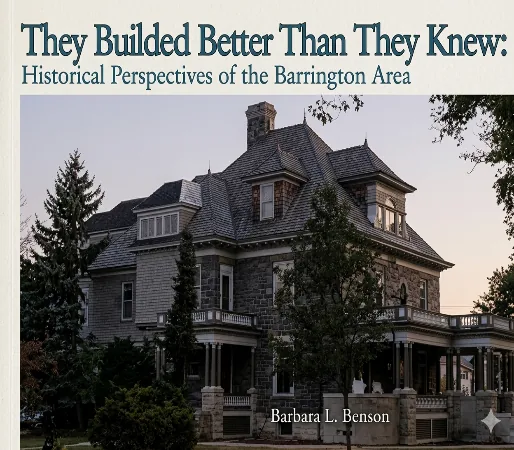
Kelsey journal entries are printed in this book. Photo of cover taken by Susan Lenski, 2024.
Early Life
Wealthy Susanna Ackley was born on 4 December 1805 in East Haddam, Connecticut, the youngest of four children of Ithamar Ackley and Mary Holmes. Her Ackley ancestors had deep roots in the community. Nicolas Ackley had emigrated from Essex, England, and was among the founders of Haddam in 1655. For more than three generations, the family remained in the East Haddam area. Susanna therefore began life in a settled New England community surrounded by longstanding family and social connections.That changed during her childhood. In 1817, her father purchased land in Wales, Erie County, New York, joining the westward movement of New England families seeking greater access to land. At about twelve years old, Susanna exchanged the established world of Connecticut for a developing community in western New York.It would not be the last time she had to adapt to a new home.
Why She Left
In Wales, New York, Susanna met Francis Hollister Kelsey. They married there on 19 March 1823 and established their household primarily in Sheldon. Over the next fifteen years, their family grew. By 1842, Francis and Susanna had six children.As land in western New York became increasingly expensive and divided, Illinois offered the possibility of larger farms and greater opportunity. Francis decided to move the family west. We do not know what role Susanna played in that decision or how she felt about leaving New York. But migration was no longer an unfamiliar experience for her. She had already left Connecticut for a frontier community as a child.This time, however, she would experience migration from a very different position: as the mother responsible for six children.
Journey to Illinois
The Kelseys left Sheldon on 20 July 1842. Details about this journey survives in Francis’s journal and family papers. Susanna traveled by wagon with Francis, their six children, and extended family members. Her mother, Mary Holmes Ackley, also made the journey.Only three days after leaving, the dangers of migration became frighteningly real. Their youngest child, DeFores, fell from the wagon and was run over by a rear wheel. The family stopped while a physician treated him before continuing west.They reached Chicago on 9 August, twenty days after leaving New York. Their household goods, which had traveled separately by water, had arrived safely. The family then continued toward the Des Plaines River. Illness soon struck members of the household. Susanna’s mother became ill in September, and a physician attributed her condition to exposure during the journey. The family was eventually advised that healthier conditions might be found farther north.Francis moved them up the Fox River into Lake County, where they settled near Cuba. For Susanna, the twenty-two-day wagon journey had ended, but the work of establishing another household was only beginning.
Building a Life in Illinois
The Kelseys began creating a permanent farm in Cuba Township. In 1844, Francis purchased 160 acres. That same year, Susanna gave birth to their seventh child, Orville, the only Kelsey child born in Illinois.The surviving records naturally document Francis’s land purchases more readily than Susanna’s daily work. But establishing a household on newly settled land required food preparation and preservation, clothing production and repair, child care, nursing the sick, and the countless routines necessary to sustain a large farm family. The family also endured loss. In 1849, sixteen-year-old, Philetus Kelsey, died following a fall from a hay barn.Meanwhile, the farm prospered. Francis continued purchasing land, including a major acquisition of 350 acres in 1854. By 1860, 200 acres were improved, and the family had established substantial agricultural holdings.Francis died on 3 October 1865. His will left his real and personal property to Susanna for her lifetime, with the land eventually to pass to their sons DeFores and Orville. Susanna, therefore, entered widowhood with a measure of economic security and responsibility for property the couple had spent more than two decades developing.In 1870, she remained on the farm next to DeFores and his family. Between 1868 and 1875, she transferred her land to DeFores, helping preserve continuity of the family property.Susanna died on 24 September 1884 in Barrington, Cook County, Illinois, at age seventy-eight. She was buried beside Francis at White Memorial Cemetery.
Migration Timeline
This timeline shows the migration path to Illinois of Wealthy Susanna Ackley’s ancestors.
| Name | Date | From | To |
|---|---|---|---|
| Nicolas Ackley (1635-1695) | 1655 | Shalford, Colchester, Essex, England | East Haddam, Middlesex, Connecticut |
| Ithamar Ackley (1763-1841) | 1817 | East Haddam, Middlesex, Connecticut | Wales, Erie, New York |
| Wealthy Susanna Ackley (1805-1884), Francis Hollister Kelsey (1797-1866) | 1823 | Wales, Erie, New York | Sheldon, Genesee, NY |
| Wealthy Susanna Ackley (1805-1884), Francis Hollister Kelsey (1797-1866) | 1842 | Sheldon, Genesee, NY | Cuba, Lake, Illinois |
Why This Story Matters
Wealthy Susanna’s story reminds us that women were partners in migration, even though they are rarely represented in records. Francis’s records allow us to measure how large the Kelsey farm became. Susanna’s story asks us to consider what it took to make that farm a home.The records make it easy to describe the Kelseys’ migration as Francis’s decision. His journal documents the journey. Land deeds record property under his name. Agricultural schedules measure the farm he developed.But Susanna made the journey too—and her responsibilities were very different. She traveled for twenty-two days with six children. Then came the work of creating a household in a newly settled area.Susanna had encountered migration before. As a girl of about twelve, she had left an established Connecticut community when her parents moved to western New York. That first migration required her to adapt to a new place chosen by her parents.The second required considerably more from her. Now she was the mother.And settlement required as much adaptation as travel. Francis could purchase land, but acreage alone did not create a home. Someone had to feed a family, care for children and the sick, maintain clothing, preserve food, and establish routines amid unfamiliar circumstances. Much of that work left no deed, census valuation, or agricultural schedule behind.Susanna’s later life adds another dimension. When Francis died, she did not immediately disappear into another household. His will gave her use of the estate for her lifetime, and she remained on the farm. Over the following years, she transferred property to their son DeFores, helping move the land the couple had built into the next generation.
Source Documents
The research documents for the Kelsey 1842 migration story:
- Biographical Sketch (PDF)
- Migration to Illinois (PDF)
- Genealogical Summary and Children (PDF)
- Legacy (PDF)
Related Reading
- Kelsey, Francis Hollister
- Kelsey Migration Story
- Paths to Illinois, Volume I The Jepson Family Story
- Migration Timeline of all sixteen families
- Ancestors & Surnames index
My Blog and Newsletter have additional stories and research related to the Kelsey family.